
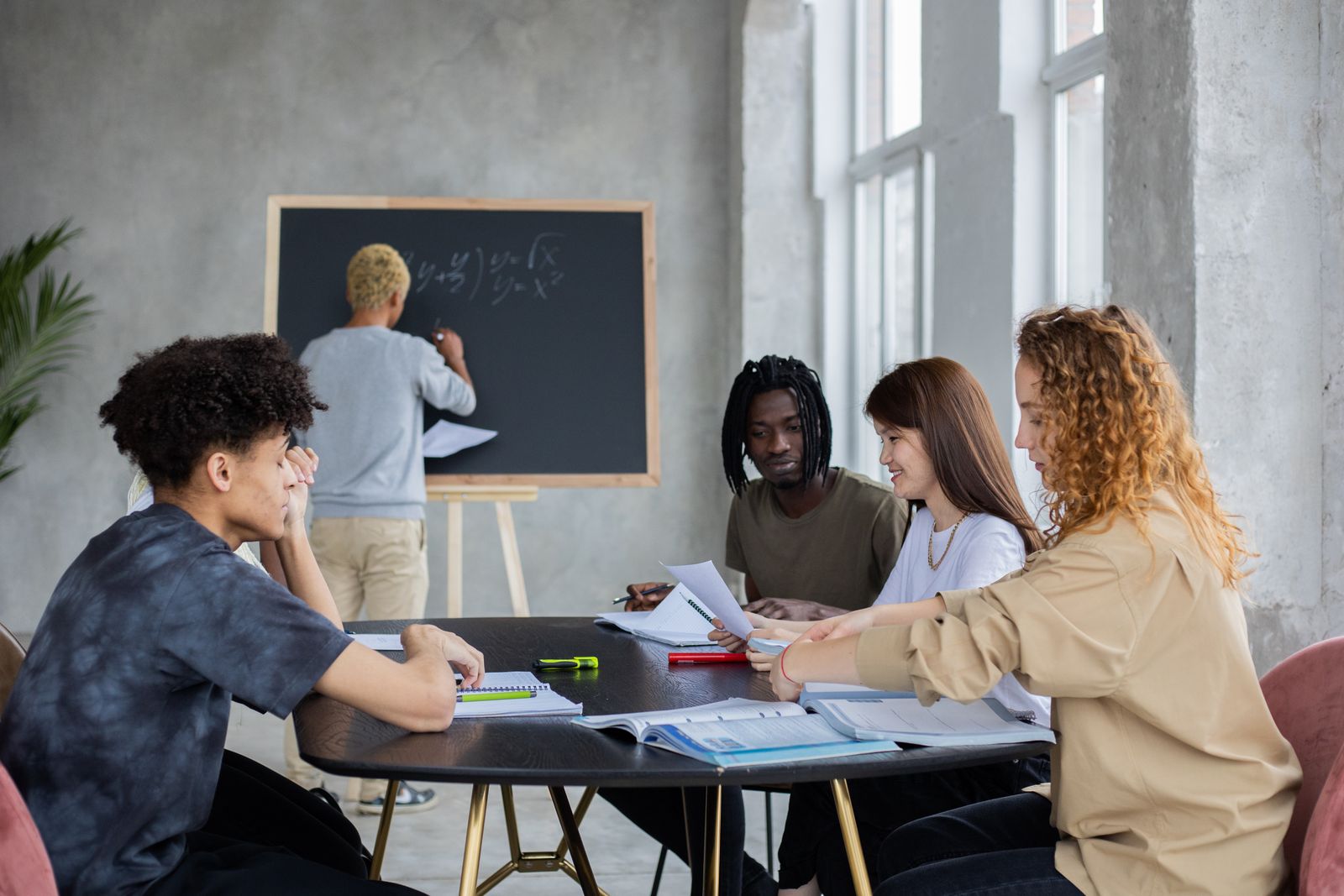
In the early months of Russia's full-scale invasion of Ukraine, teachers in Kharkiv held lessons inside metro stations. Students sat on folding chairs beneath fluorescent lights; textbooks balanced on laps. It was school and it was also survival.
Armed conflict has always forced education systems to improvise. What is changing is the scale and the duration. Today, according to UNICEF, more than 222 million children in crisis-affected countries need educational support.
At Earth Rooted, we work to ensure that what happens inside those metro stations and displacement tents is understood far beyond their walls. Because the way education bends under conflict reveals something essential about the societies caught inside it.
The Classroom is Never Just a Classroom
In peacetime, school buildings are infrastructure. In wartime, it becomes a target, a shelter or a symbol. The UN Secretary-General's Annual Report on Children and Armed Conflict has documented attacks on educational facilities every year for more than a decade. In 2023 alone, verified attacks were documented across Gaza, Sudan, Myanmar and Ukraine.
The damage is not only physical. Research by the International Rescue Committee has found that children in crisis settings are significantly more likely to experience anxiety, grief responses and difficulty concentrating. These conditions undermine learning. Teachers know this but most have no training to address it.
Curriculum as Negotiation
In displacement camps along the Chad–Sudan border, where hundreds of thousands have fled the civil conflict between the Sudanese Armed Forces and the Rapid Support Forces, teachers work from condensed curricula designed for temporary settings. Mathematics is prioritised because it crosses language barriers. Mother-tongue literacy remains a persistent challenge for children who arrive speaking dialects with no standardised written form. Every curricular decision in a crisis setting is also a values decision.
In Ukraine, the government moved quickly to establish a national distance-learning platform within weeks of the 2022 invasion. By late 2022, millions of students were accessing lessons digitally, though connectivity gaps left rural and frontline communities largely unreachable.
The Teacher at the Centre
Discussions about education in conflict tend to focus on children. This is understandable. But the teacher is the institution in moments of collapse.
In Afghanistan, following the Taliban's return to power in 2021, thousands of women that had built lives as teachers were removed from classrooms overnight. The effect on girls' education has been catastrophic and well-documented. Teacher wellbeing should not be a secondary concern. It is the fulcrum on which education either holds or collapses.
Long-Term Corrosion
A UNESCO study found that children who experience prolonged displacement lose on average 1.5 years of schooling. But the loss is not simply temporal. Skills that are not consolidated during critical developmental windows require sustained, targeted intervention to recover.
Education in Emergencies consistently receives less than 4% of total humanitarian funding, despite being a recognised fundamental right under the UN Convention on the Rights of the Child.
What Adaptation Looks Like
In Lebanon, local groups have developed peer-tutoring networks where older students support younger ones. These programmes were not designed by international agencies. They came from the communities themselves. In Gaza, teachers filmed and distributed lessons via WhatsApp during periods of bombardment when no other channel functioned.
Adaptation in conflict is a testament to what people do when they have no other option. At Earth Rooted, we hold these realities at the centre of the work. When we design VR experiences that place audiences inside a displacement camp's learning space, we are making the texture of these choices legible. The negotiation between safety and normalcy, between surviving this week and learning for a future that feels distant.
Understanding that negotiation is, we believe, where solidarity begins.